Aid workers face major security challenge in Afghanistan: ICRC

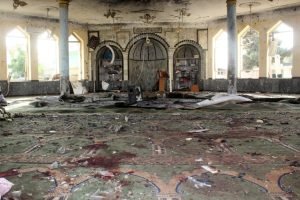
KABUL: (MEP) – The International Committee of the Red Cross (ICRC) announced Wednesday that indiscriminate attacks, military operations affecting civilians and overall instability were on the rise in Afghanistan in 2013.
ICRC expressed concerns regarding the growing violence in the country which presents a major challenge in Afghanistan for civilians and aid workers.
Gherardo Pontrandolfi, head of the ICRC delegation in Afghanistan, said, “Lack of security remains a critical issue for the population and we have not seen any improvements in 2013.”
Pontrandolfi further added, “For example, civilians are being caught in crossfire and are often unable to reach health-care centres simply because it is not safe to move about. All too often, care facilities are targeted, and services disrupted, particularly in remote areas.”
ICRC urged all the parties involved in Afghanistan conflict to respect the aid workers and take necessary measures to ensure the safety of the medical personnel, facilities and transport.
It also called on Humanitarian organizations also have to consider how to operate safely in an increasingly insecure environment, so as to ensure that key activities such as support to health services, visits to detainees and other protection-related work, assistance programmes and interaction with Afghan Red Crescent partners could continue at optimum capacity, while at the same time reducing staff exposure to risk.
ICRC pointed towards the attack on the ICRC’s sub-delegation in Jalalabad in May 2013 led to a re-thinking of the organization’s presence in the country, however, ICRC remained operations throughout 2013 despite the security constraints and difficulties to access to many parts of Afghanistan.
“We need to keep in mind our long-term presence in the country,” Mr. Pontrandolfi said, adding that, “We have been working in Afghanistan for nearly 30 years, and are well known to all the parties. Our intention is to remain for as long as there are needs to be addressed. Of special concern is the suffering of people living in remote, conflict-affected areas that are hard to reach.”
IcRC in its statement also said that the security situation in Afghanistan is unlikely to improve in the months ahead.
Upcoming presidential elections, the ongoing drawdown of international forces, the likelihood of reduced donor funding, endemic poverty and high unemployment are only some of the factors that will continue to haunt Afghanistan, ICRC said.
Pontrandolfi said, “The future does not look promising. The situation for ordinary Afghans as well as for humanitarian workers remains precarious, but we are not packing up and going. However, we will have to ensure the right balance between risk and action in order to remain as close as possible to people in need.”